Semiconductor Power Switches: Diodes, BJTs, MOSFETs, IGBTs, and Wide-Bandgap GaN/SiC
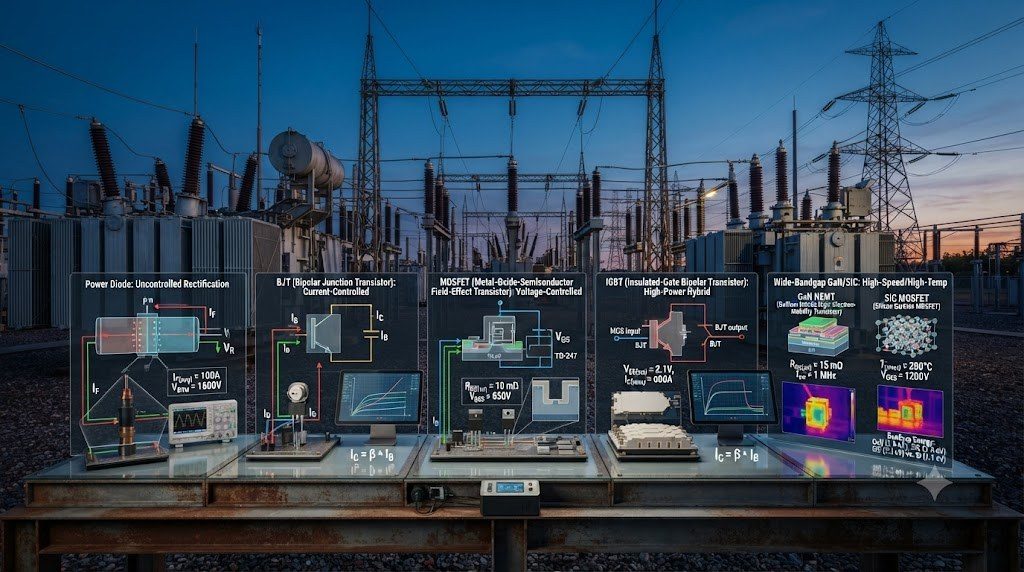
At the apex of modern electrical and electronic engineering stands the semiconductor power switch. While passive resistors, capacitors, and inductors store, divide, and filter electrical energy, solid-state semiconductor devices are the active engines that control, modulate, amplify, and interrupt electrical currents. The transition from bulky, fragile vacuum tube triodes to solid-state silicon (Si), and now … Read more
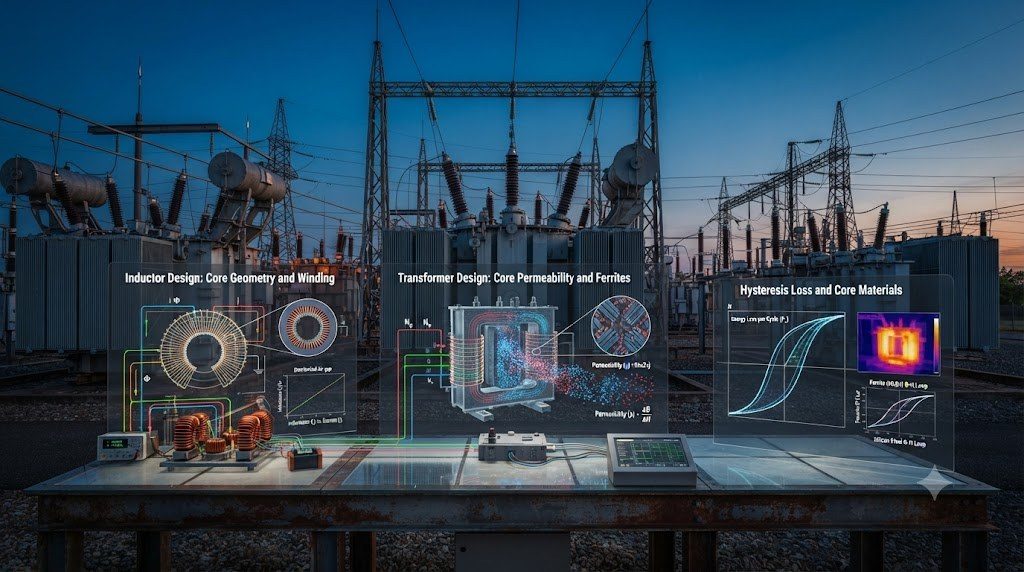
Magnetic Inductor & Transformer Design: Core Permeability, Ferrites, and Hysteresis Loss

In the physical architecture of power conversion, radio frequency circuits, and electromagnetic machinery, magnetic components—specifically inductors and transformers—represent the essential physical bridge between electric currents and dynamic magnetic fields. Governed fundamentally by Faraday’s Law of Induction, Ampere’s Circuital Law, and Lenz’s Law, magnetic devices store energy dynamically in magnetic flux fields, step AC potentials up … Read more

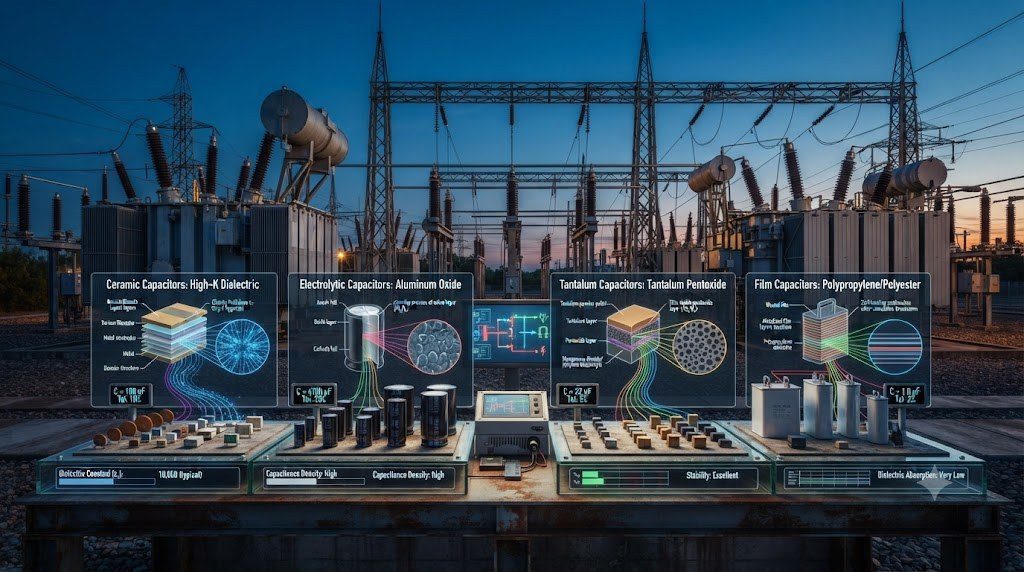
Capacitor Physics & Dielectric Materials: Ceramic, Electrolytic, Tantalum, and Film

In electronic circuit engineering, the capacitor is the preeminent passive component utilized for dynamic electrostatic energy storage, power supply decoupling, AC signal coupling, DC blocking, and frequency filtering. Comprising two conductive plates separated by an insulating dielectric medium, a capacitor stores electrical energy in the form of a polarized electrostatic field established between its plates … Read more

Resistor Technologies: Thin-Film, Thick-Film, Wirewound, and Parasitic Inductance

Among all fundamental passive electronic components, the resistor is the most ubiquitous, representing the primary linear circuit element utilized to establish bias voltages, limit electrical currents, divide signal potentials, terminate transmission lines, and dissipate excess electrical energy as thermal heat. Defined by Ohm’s Law (V = I * R), an ideal resistor presents pure, invariant … Read more

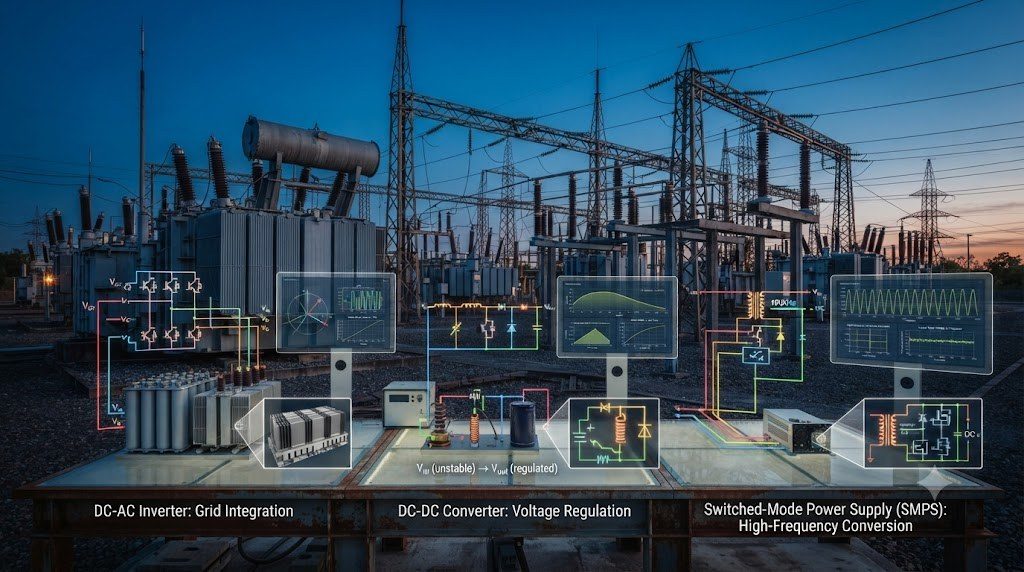
Power Electronics Conversion: Inverters, Converters, and Switched-Mode Power Supplies (SMPS)

In modern electrical engineering, the historical boundary separating high-power utility systems from low-power electronic microchips has vanished, bridged by the discipline of Power Electronics. Power electronics is the application of solid-state semiconductor switching devices to control, condition, and convert electrical energy from one form to another—AC to DC, DC to DC, DC to AC, or … Read more

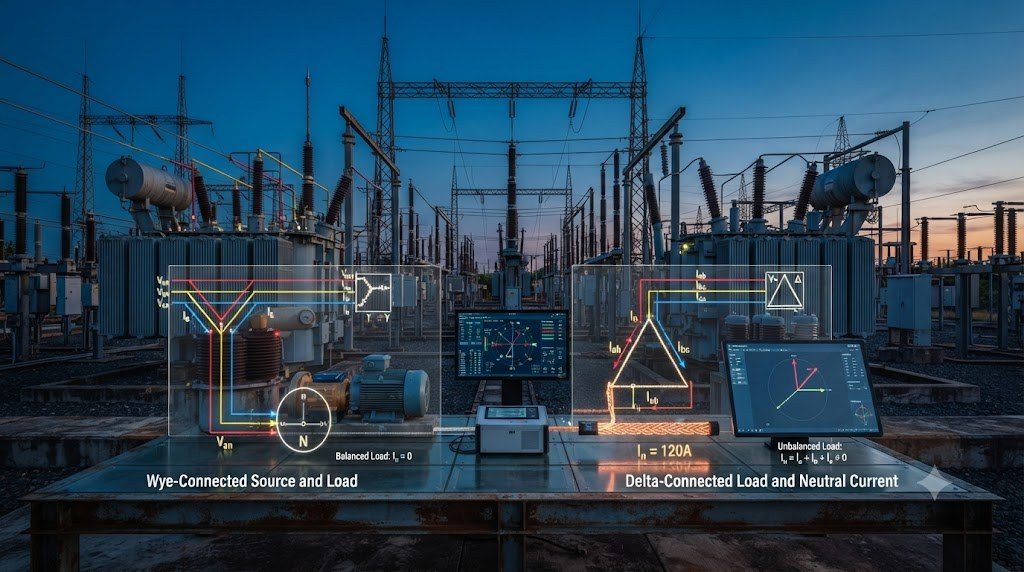
Three-Phase Power Engineering: Balanced Wye-Delta Systems and Neutral Currents

Across the global landscape of electrical generation, long-distance transmission, and heavy industrial automation, alternating current electricity is delivered almost universally through polyphase three-phase systems. Invented and patented by Nikola Tesla in 1888, three-phase electrical power is widely regarded as one of the most brilliant engineering achievements in human history, fundamentally superior to single-phase distribution in … Read more

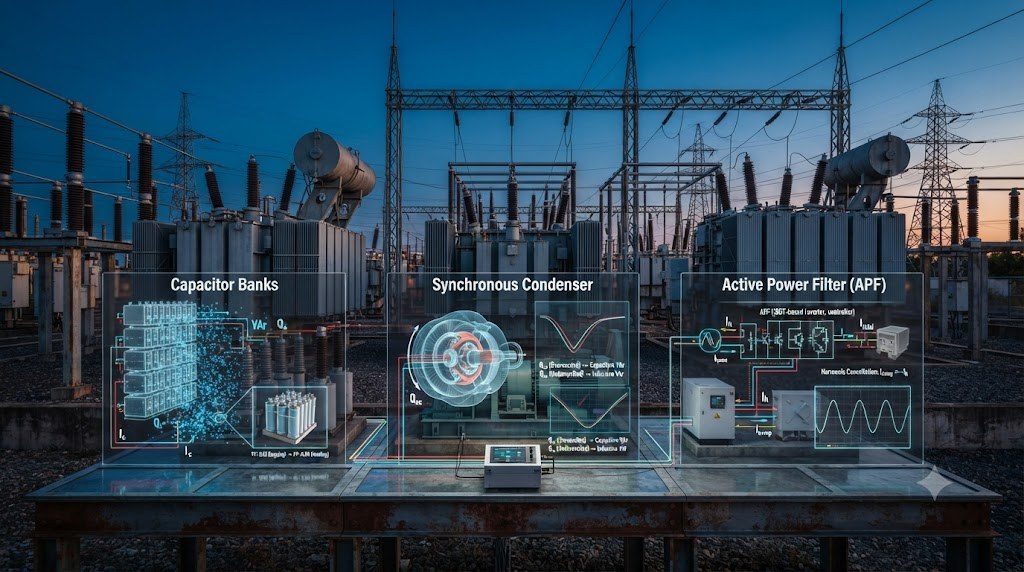
Power Factor Correction: Capacitor Banks, Synchronous Condensers, and Active Filters

In industrial plant engineering and utility grid operations, Power Factor Correction (PFC) is one of the most financially impactful and operationally vital engineering practices. Industrial facilities operate hundreds of heavy inductive loads—induction motors, arc furnaces, variable-frequency drives, and welding machines—that draw substantial lagging reactive current, depressing facility power factor from an ideal 1.0 down to … Read more

Electrical Power Fundamentals: Active, Reactive, and Apparent Power Triangles

In the thermodynamic physics of electrical systems, electrical power is the temporal rate at which electrical energy is transferred, dissipated, or converted into mechanical work, thermal heat, chemical storage, or electromagnetic radiation. Measured within the International System of Units (SI) in Watts (W)—where one Watt equals one Joule of energy converted per second (1 W … Read more

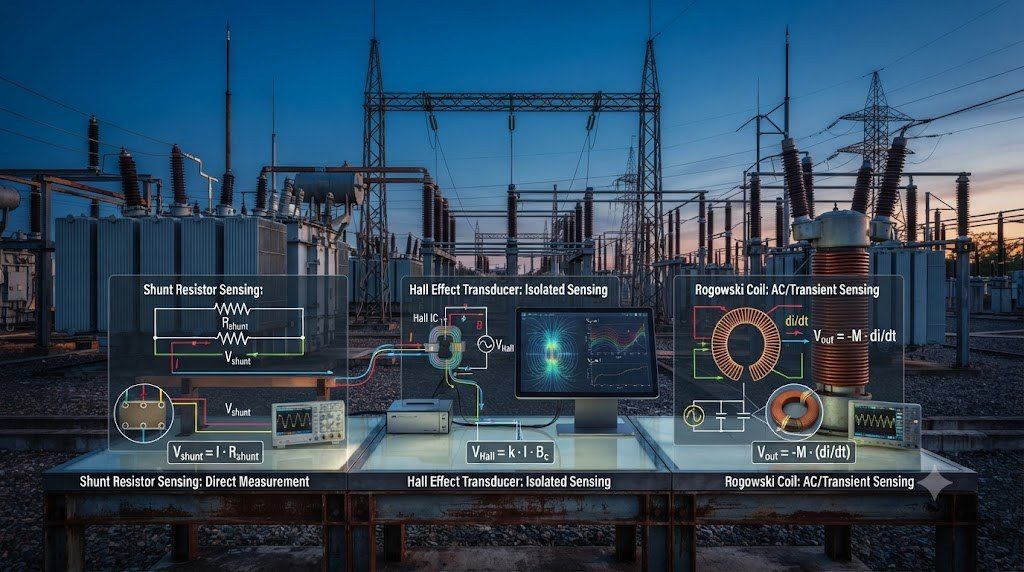
Current Sensing Techniques: Shunt Resistors, Hall Effect Transducers, and Rogowski Coils

In modern electronic power management, motor motion control, and electrical metering, you cannot control or protect what you cannot accurately measure. Current sensing is the vital sensory bridge that converts dynamic electric current flowing through high-voltage conductors into calibrated, low-voltage analog or digital signals suitable for microcontrollers, digital signal processors (DSPs), and feedback control loops. … Read more

Overcurrent Protection: Fuses, Thermal-Magnetic Circuit Breakers, and Coordination

In electrical engineering, circuit design is incomplete without comprehensive overcurrent protection. Whenever an electrical fault occurs—whether a dead short circuit between phase conductors, an insulation breakdown in a transformer winding, or an electrical motor driven into mechanical stall—circuit currents can escalate within milliseconds from normal operational levels (tens of amperes) into catastrophic fault surges exceeding … Read more

About PowersGuide

About PowersGuide

PowersGuide is your premier online engineering reference dedicated to electrical engineering, circuit analysis, power electronics, and high-voltage grid systems. We empower electrical engineers, technicians, and students with mathematically rigorous and practically verified insights.

Learn More →
Circuit Physics Transient & steady-state analysis
Power Semiconductors MOSFETs, IGBTs & GaN/SiC
Grid Distribution High-voltage substations & safety