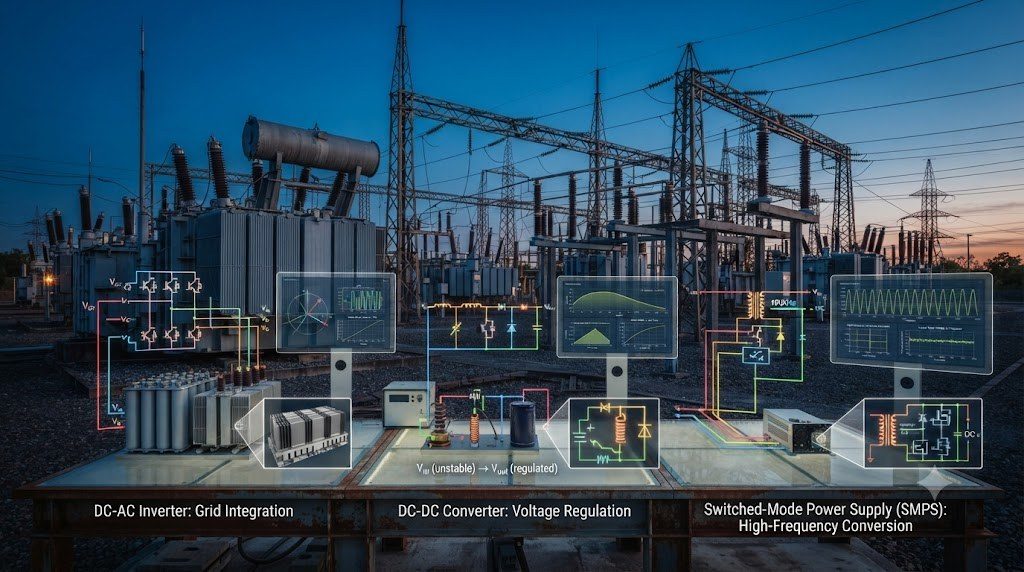
Direct vs. Alternating Current Flow: Directional Charge Transport and Waveforms
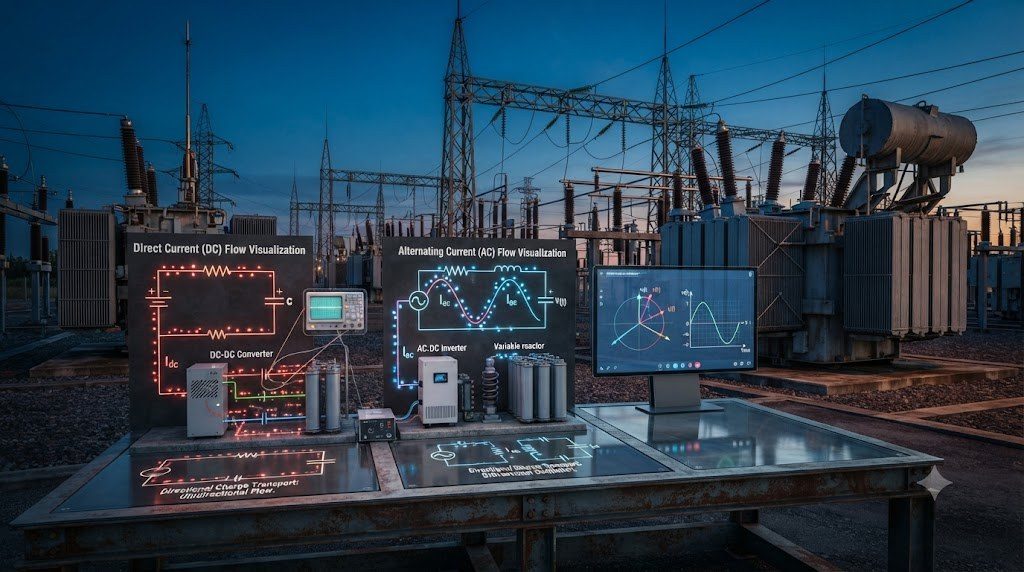
In the physical transport of electrical energy, the temporal directionality of charge motion defines the two fundamental operating modes of electrical engineering: Direct Current (DC) and Alternating Current (AC). In a Direct Current circuit, electric charge flows persistently in a single, unchanging direction through the conducting path. In an Alternating Current circuit, the direction of … Read more
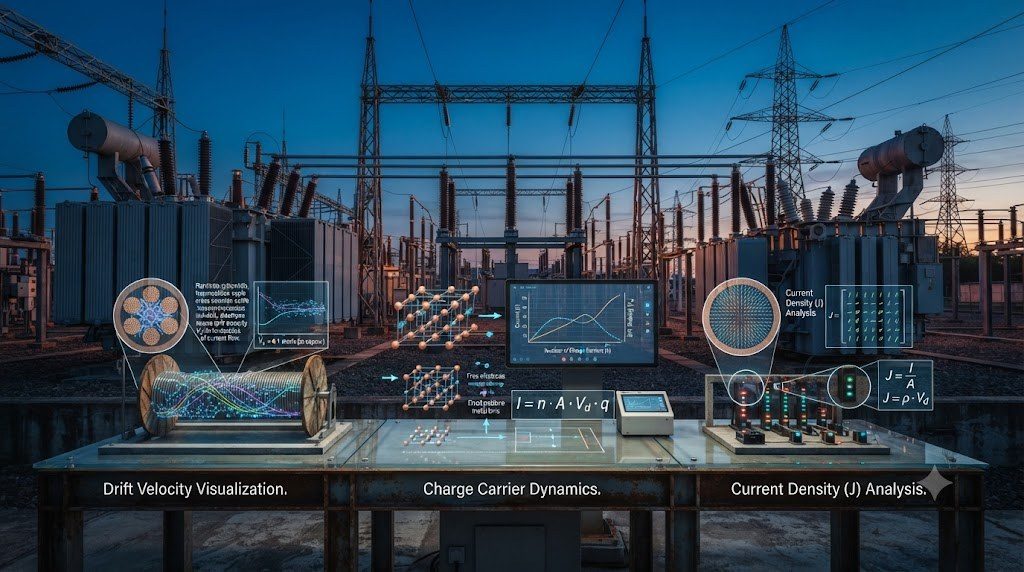
Electric Current Fundamentals: Drift Velocity, Charge Carriers, and Current Density

In physical chemistry and electromagnetic field theory, electric current is the macroscopic rate of transport of net electric charge across a defined cross-sectional boundary. Measured within the International System of Units (SI) in Amperes (A)—where one Ampere equals one Coulomb of charge traversing a surface per second (1 A = 1 C/s)—current represents the actual … Read more

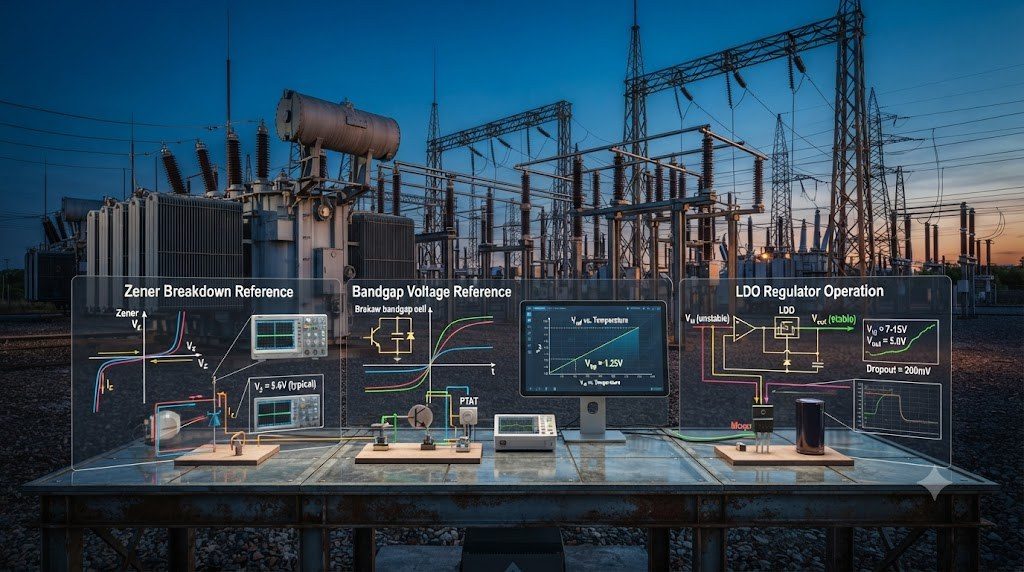
Voltage Regulation & Reference Circuits: Zener Breakdown, Bandgaps, and LDO Regulators

In electronic circuit design, a clean, unyielding, noise-free voltage potential is the foundational reference against which all analog signals are measured and digital logic states are defined. Whether supplying a sensitive 24-bit analog-to-digital converter (ADC) measuring microvolt biosignals or powering a high-speed FPGA drawing 50 amperes at 0.85 volts, circuit operation collapses if the supply … Read more

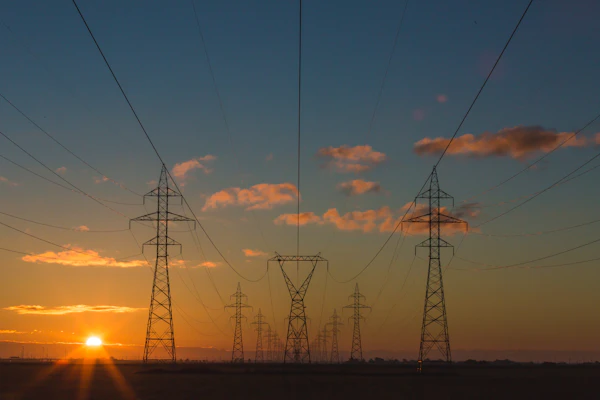
High-Voltage Transmission: Step-Up Transformers, Corona Discharge, and Grid Efficiency

The foundation of continental electrical power distribution rests upon an immutable law of electrical physics: to transmit electrical energy over long distances with minimal loss, voltage must be stepped up to extreme potentials. Every power station on Earth—whether nuclear, hydroelectric, coal, or utility-scale solar—generates electricity at moderate potentials (typically 11 kV to 25 kV), but … Read more

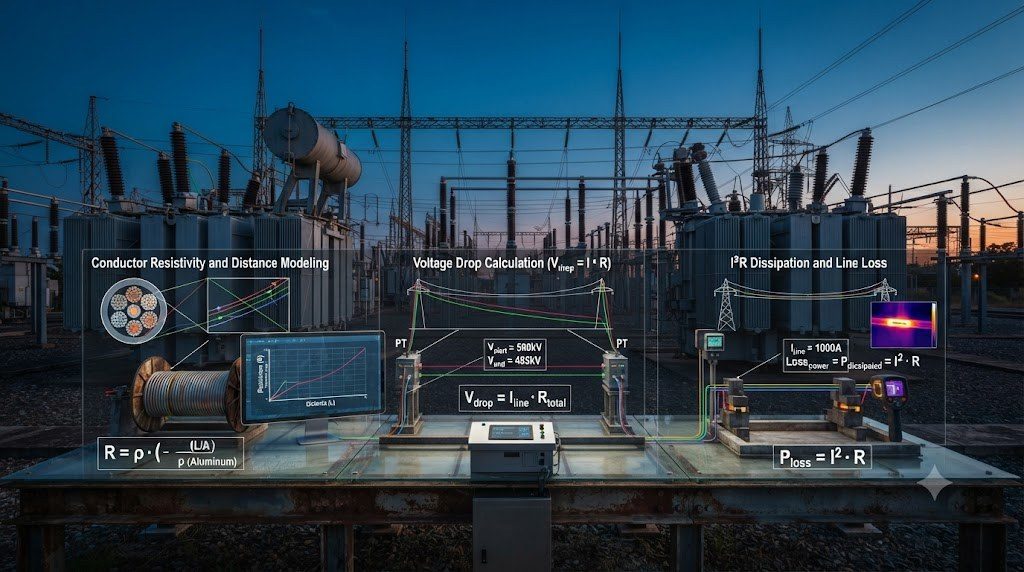
Voltage Drops & Line Loss: I^2R Dissipation, Conductor Resistivity, and Distance Modeling

In electrical power distribution, industrial automation, and printed circuit board (PCB) design, conductors are often treated theoretically as zero-resistance ideal conduits. In the physical reality of copper and aluminum wiring, however, every millimeter of metal possesses finite electrical resistance determined by material resistivity, operating temperature, conductor length, and cross-sectional area. When electric currents traverse real … Read more

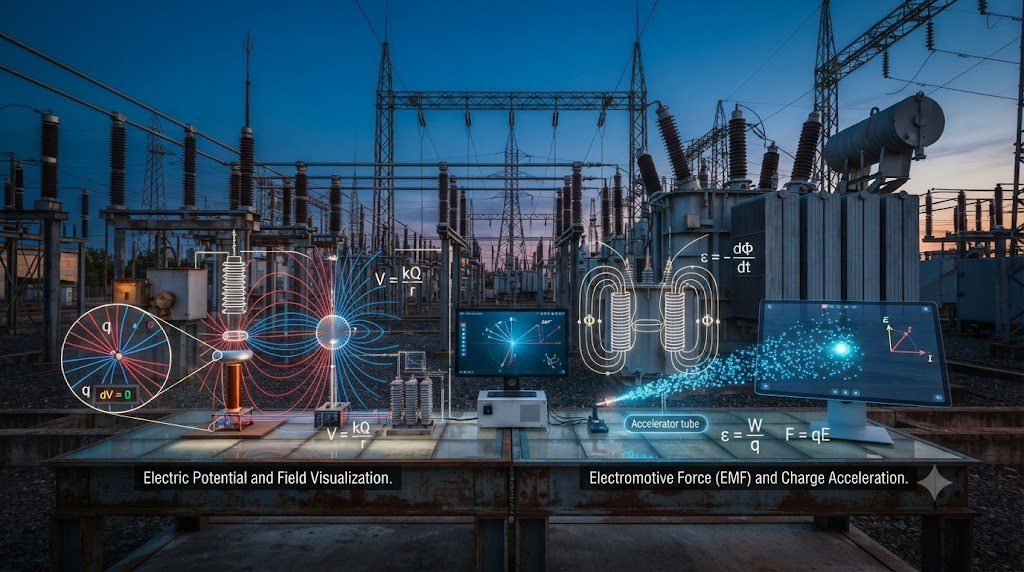
Electric Potential & Electromotive Force (EMF): Electrostatic Fields and Charge Acceleration

In classical electrodynamics and circuit physics, voltage—formally designated as electric potential difference—is the primary thermodynamic and electromagnetic driving force that propels electric charges through a conducting medium. Without a potential difference, free conduction electrons inside a metallic lattice wander in chaotic, random thermal motion with zero net macroscopic drift velocity. Voltage establishes the directed electrostatic … Read more

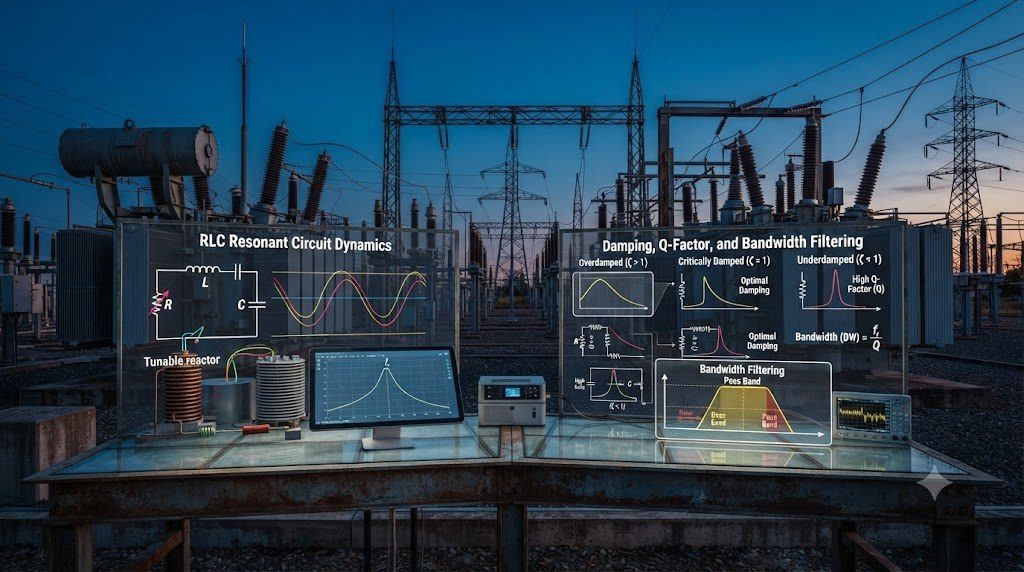
RLC Resonant Circuits: Damping Factors, Q-Factor, and Bandwidth Filtering

In electronic engineering and telecommunications, few network configurations possess greater utility and mathematical elegance than the Resonant RLC Circuit. Comprising a resistor (R), inductor (L), and capacitor (C) connected in series or parallel, an RLC circuit functions as a second-order linear dynamic system capable of natural electrical oscillation. The continuous, cyclical exchange of energy between … Read more

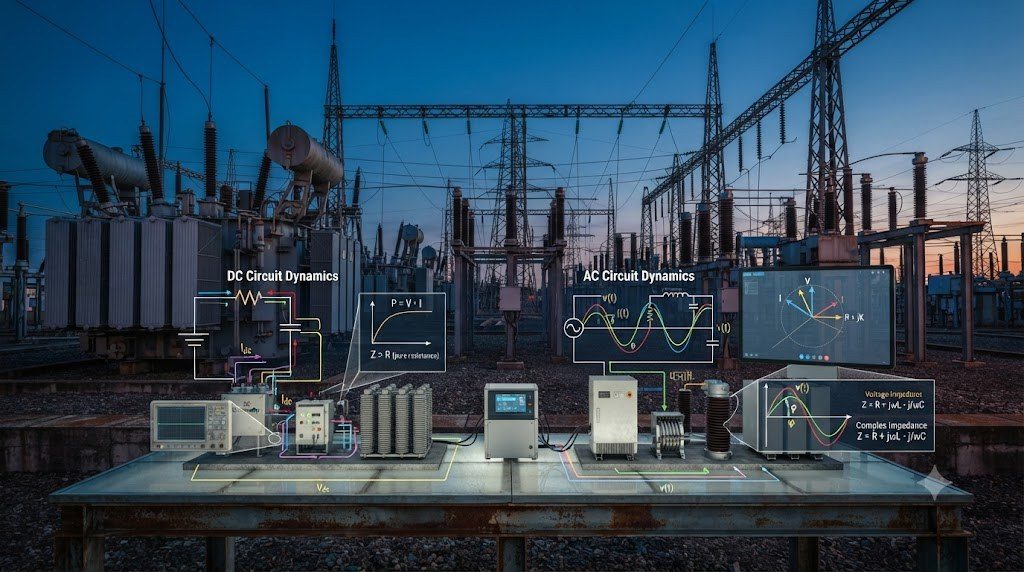
AC vs. DC Circuit Dynamics: Phasors, Complex Impedance, and Phase Angles

The historical and technological divide between Direct Current (DC) and Alternating Current (AC) defines the modern electrical landscape. Originating in the fierce nineteenth-century “War of Currents” between Thomas Edison’s low-voltage DC grids and Nikola Tesla’s transformer-coupled polyphase AC systems, the physical divergence between steady-state unidirectional electron flow and sinusoidal oscillatory electron motion underpins everything from … Read more

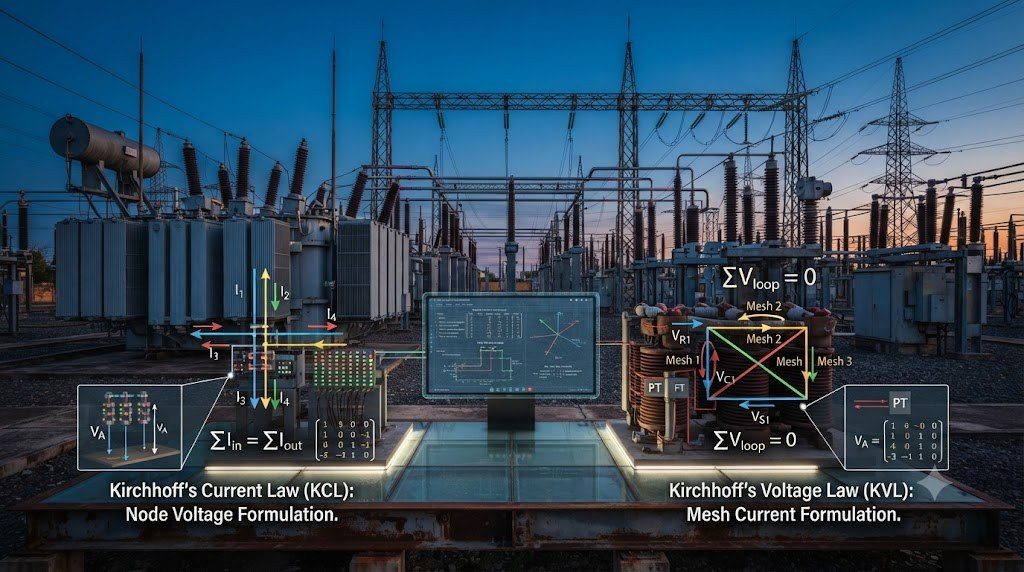
Kirchhoff’s Laws: Node Voltage (KCL) and Mesh Current (KVL) Formulations

At the bedrock of all lumped-parameter electrical circuit analysis lie two fundamental physical laws formulated in 1845 by German physicist Gustav Kirchhoff: Kirchhoff’s Current Law (KCL) and Kirchhoff’s Voltage Law (KVL). While Maxwell’s electromagnetic field equations describe electromagnetic wave propagation across continuous space, Kirchhoff’s laws translate these spatial vector relationships into elegant, solvable algebraic equations … Read more

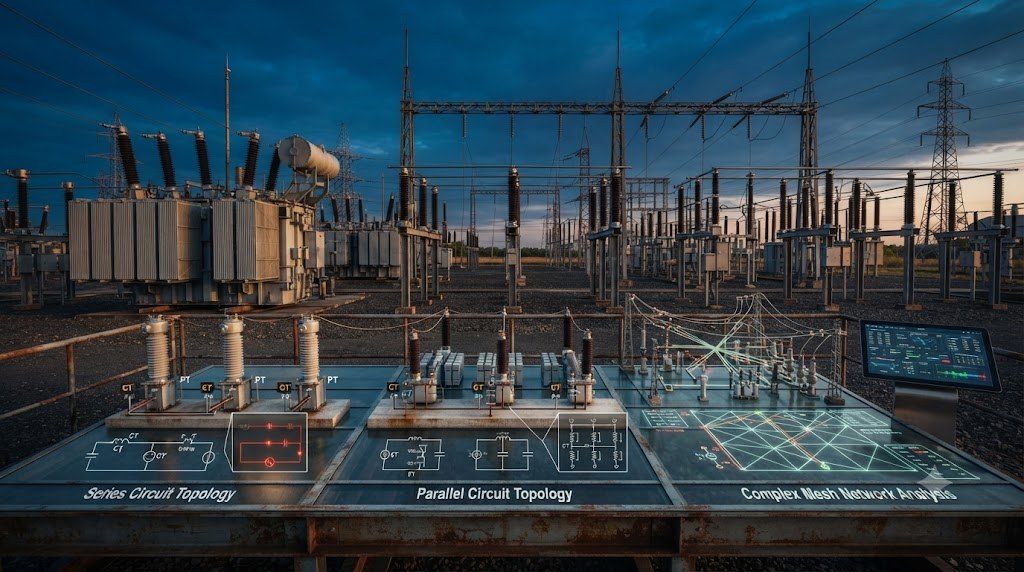
Circuit Topologies: Series, Parallel, and Complex Mesh Network Analysis

In the foundational physics and engineering of electrical systems, an electrical circuit is a closed conducting path through which electric charges flow under the influence of potential differences. Whether analyzing a microscopic integrated circuit (IC) containing billions of sub-micron MOSFET transistors or a continental high-voltage electrical grid transmitting gigawatts of alternating current, the underlying mathematical … Read more

About PowersGuide

About PowersGuide

PowersGuide is your premier online engineering reference dedicated to electrical engineering, circuit analysis, power electronics, and high-voltage grid systems. We empower electrical engineers, technicians, and students with mathematically rigorous and practically verified insights.

Learn More →
Circuit Physics Transient & steady-state analysis
Power Semiconductors MOSFETs, IGBTs & GaN/SiC
Grid Distribution High-voltage substations & safety