Voltage Regulation & Reference Circuits: Zener Breakdown, Bandgaps, and LDO Regulators
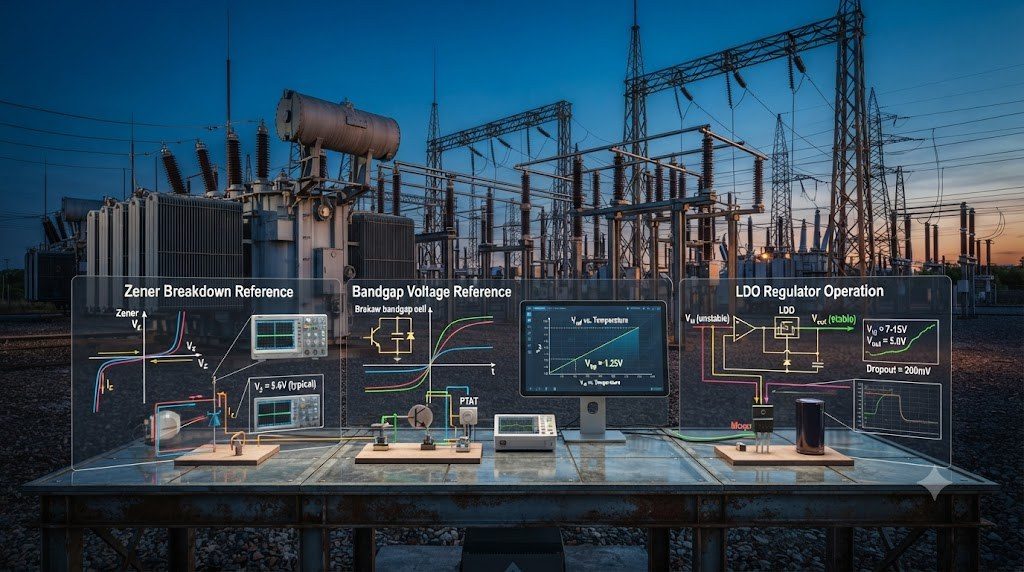
In electronic circuit design, a clean, unyielding, noise-free voltage potential is the foundational reference against which all analog signals are measured and digital logic states are defined. Whether supplying a sensitive 24-bit analog-to-digital converter (ADC) measuring microvolt biosignals or powering a high-speed FPGA drawing 50 amperes at 0.85 volts, circuit operation collapses if the supply … Read more

High-Voltage Transmission: Step-Up Transformers, Corona Discharge, and Grid Efficiency

The foundation of continental electrical power distribution rests upon an immutable law of electrical physics: to transmit electrical energy over long distances with minimal loss, voltage must be stepped up to extreme potentials. Every power station on Earth—whether nuclear, hydroelectric, coal, or utility-scale solar—generates electricity at moderate potentials (typically 11 kV to 25 kV), but … Read more

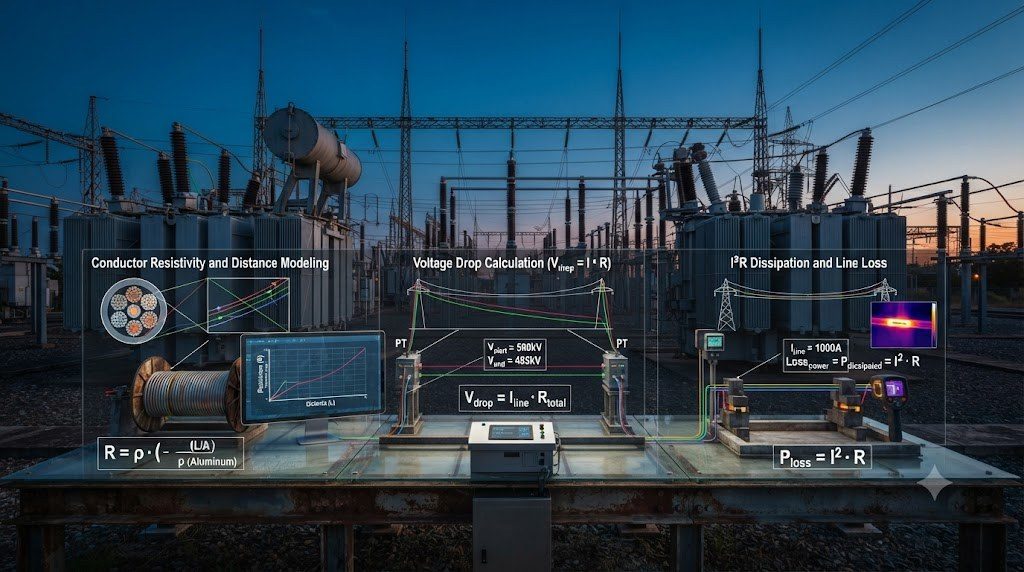
Voltage Drops & Line Loss: I^2R Dissipation, Conductor Resistivity, and Distance Modeling

In electrical power distribution, industrial automation, and printed circuit board (PCB) design, conductors are often treated theoretically as zero-resistance ideal conduits. In the physical reality of copper and aluminum wiring, however, every millimeter of metal possesses finite electrical resistance determined by material resistivity, operating temperature, conductor length, and cross-sectional area. When electric currents traverse real … Read more

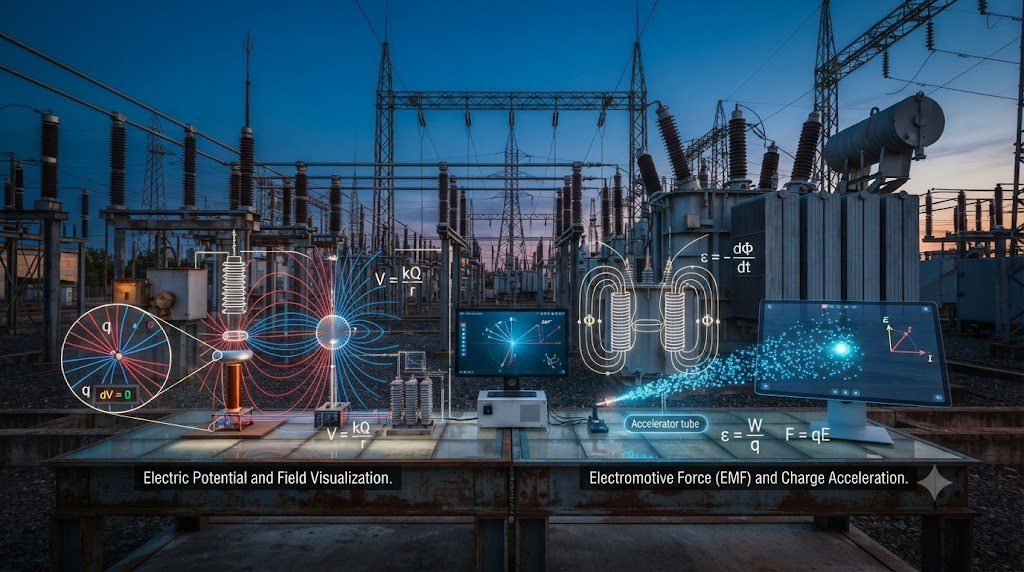
Electric Potential & Electromotive Force (EMF): Electrostatic Fields and Charge Acceleration

In classical electrodynamics and circuit physics, voltage—formally designated as electric potential difference—is the primary thermodynamic and electromagnetic driving force that propels electric charges through a conducting medium. Without a potential difference, free conduction electrons inside a metallic lattice wander in chaotic, random thermal motion with zero net macroscopic drift velocity. Voltage establishes the directed electrostatic … Read more