Power Electronics Conversion: Inverters, Converters, and Switched-Mode Power Supplies (SMPS)
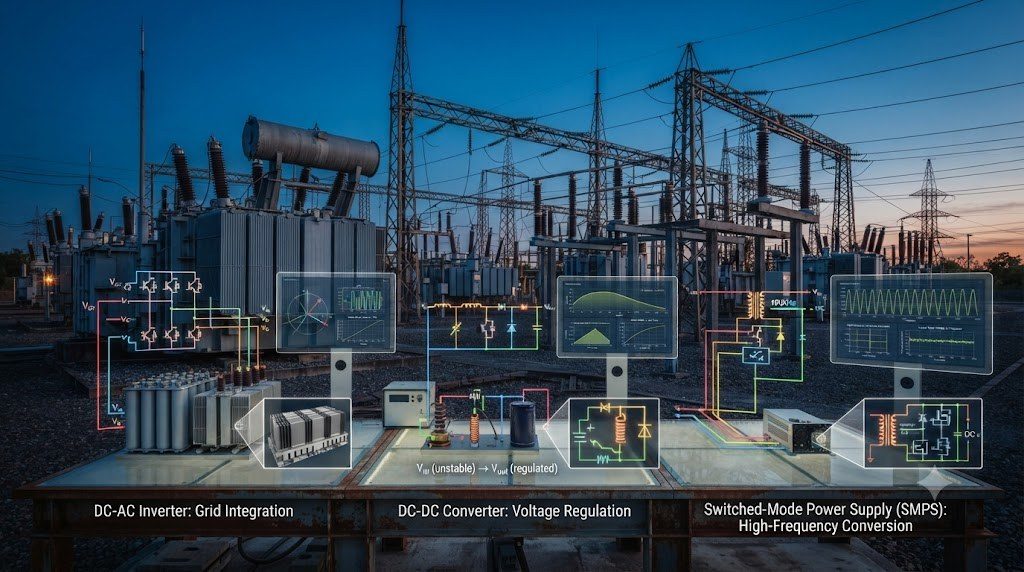
In modern electrical engineering, the historical boundary separating high-power utility systems from low-power electronic microchips has vanished, bridged by the discipline of Power Electronics. Power electronics is the application of solid-state semiconductor switching devices to control, condition, and convert electrical energy from one form to another—AC to DC, DC to DC, DC to AC, or … Read more
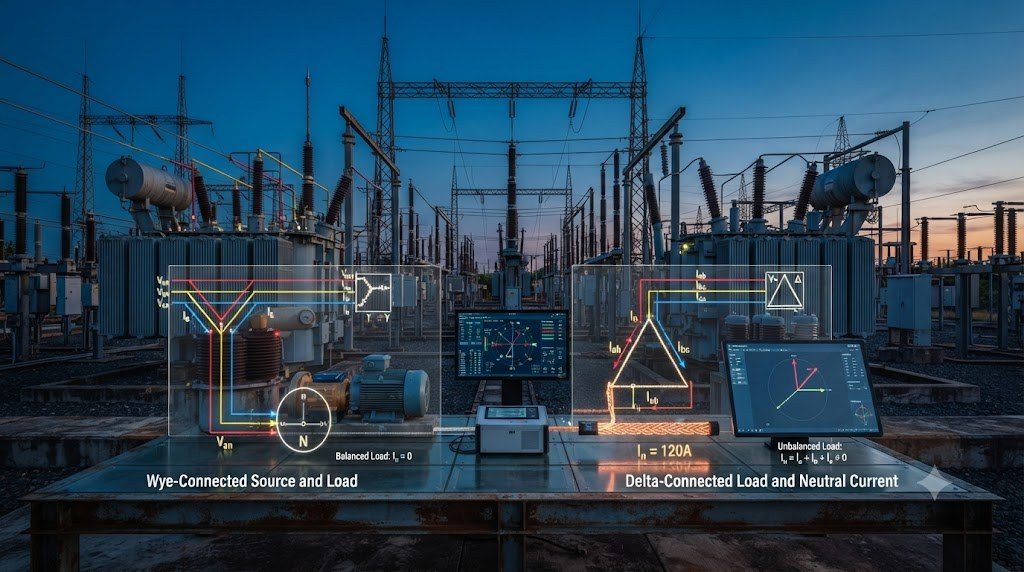
Three-Phase Power Engineering: Balanced Wye-Delta Systems and Neutral Currents

Across the global landscape of electrical generation, long-distance transmission, and heavy industrial automation, alternating current electricity is delivered almost universally through polyphase three-phase systems. Invented and patented by Nikola Tesla in 1888, three-phase electrical power is widely regarded as one of the most brilliant engineering achievements in human history, fundamentally superior to single-phase distribution in … Read more

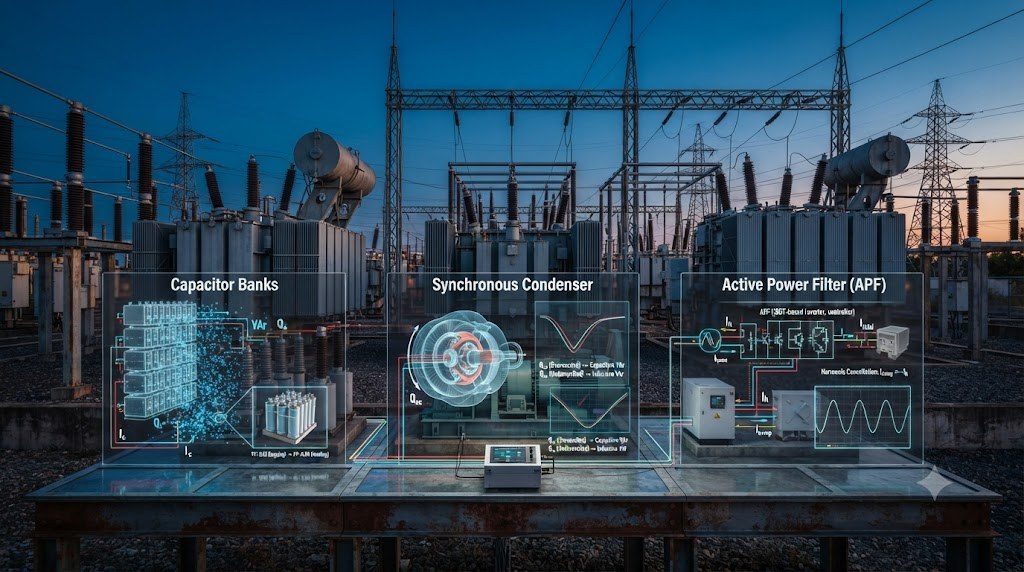
Power Factor Correction: Capacitor Banks, Synchronous Condensers, and Active Filters

In industrial plant engineering and utility grid operations, Power Factor Correction (PFC) is one of the most financially impactful and operationally vital engineering practices. Industrial facilities operate hundreds of heavy inductive loads—induction motors, arc furnaces, variable-frequency drives, and welding machines—that draw substantial lagging reactive current, depressing facility power factor from an ideal 1.0 down to … Read more

Electrical Power Fundamentals: Active, Reactive, and Apparent Power Triangles

In the thermodynamic physics of electrical systems, electrical power is the temporal rate at which electrical energy is transferred, dissipated, or converted into mechanical work, thermal heat, chemical storage, or electromagnetic radiation. Measured within the International System of Units (SI) in Watts (W)—where one Watt equals one Joule of energy converted per second (1 W … Read more