Current Sensing Techniques: Shunt Resistors, Hall Effect Transducers, and Rogowski Coils
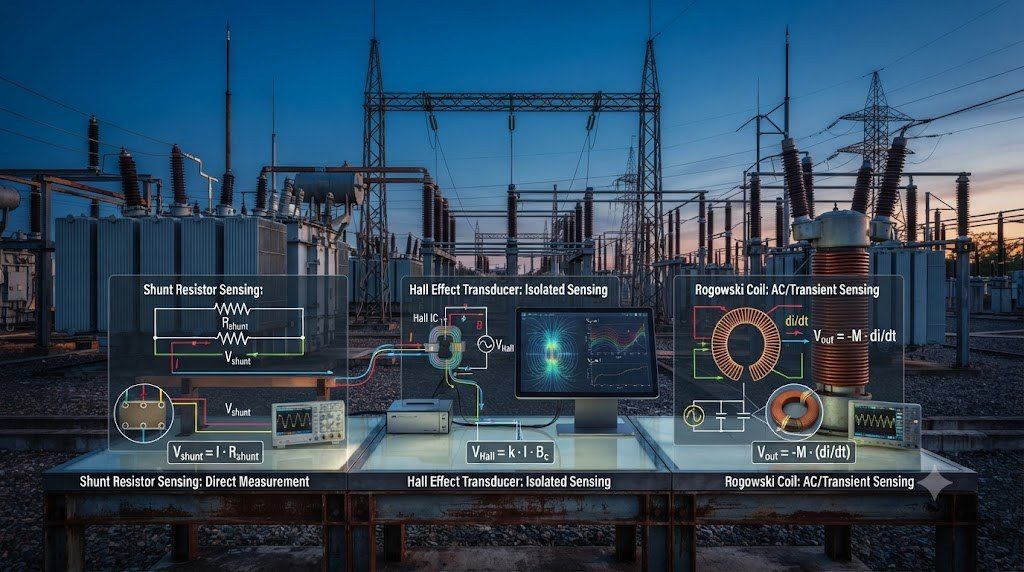
In modern electronic power management, motor motion control, and electrical metering, you cannot control or protect what you cannot accurately measure. Current sensing is the vital sensory bridge that converts dynamic electric current flowing through high-voltage conductors into calibrated, low-voltage analog or digital signals suitable for microcontrollers, digital signal processors (DSPs), and feedback control loops. … Read more

Overcurrent Protection: Fuses, Thermal-Magnetic Circuit Breakers, and Coordination

In electrical engineering, circuit design is incomplete without comprehensive overcurrent protection. Whenever an electrical fault occurs—whether a dead short circuit between phase conductors, an insulation breakdown in a transformer winding, or an electrical motor driven into mechanical stall—circuit currents can escalate within milliseconds from normal operational levels (tens of amperes) into catastrophic fault surges exceeding … Read more

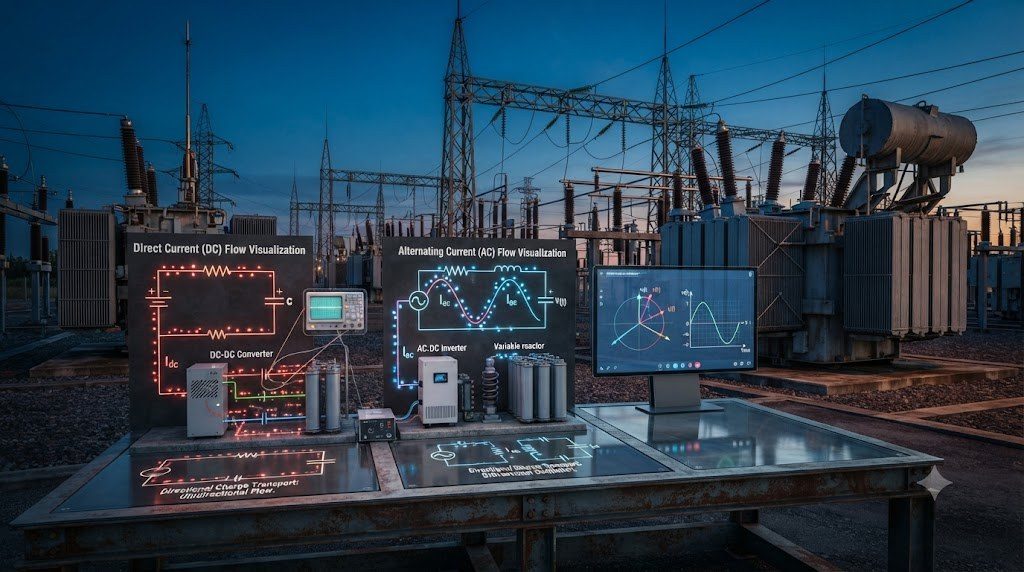
Direct vs. Alternating Current Flow: Directional Charge Transport and Waveforms

In the physical transport of electrical energy, the temporal directionality of charge motion defines the two fundamental operating modes of electrical engineering: Direct Current (DC) and Alternating Current (AC). In a Direct Current circuit, electric charge flows persistently in a single, unchanging direction through the conducting path. In an Alternating Current circuit, the direction of … Read more

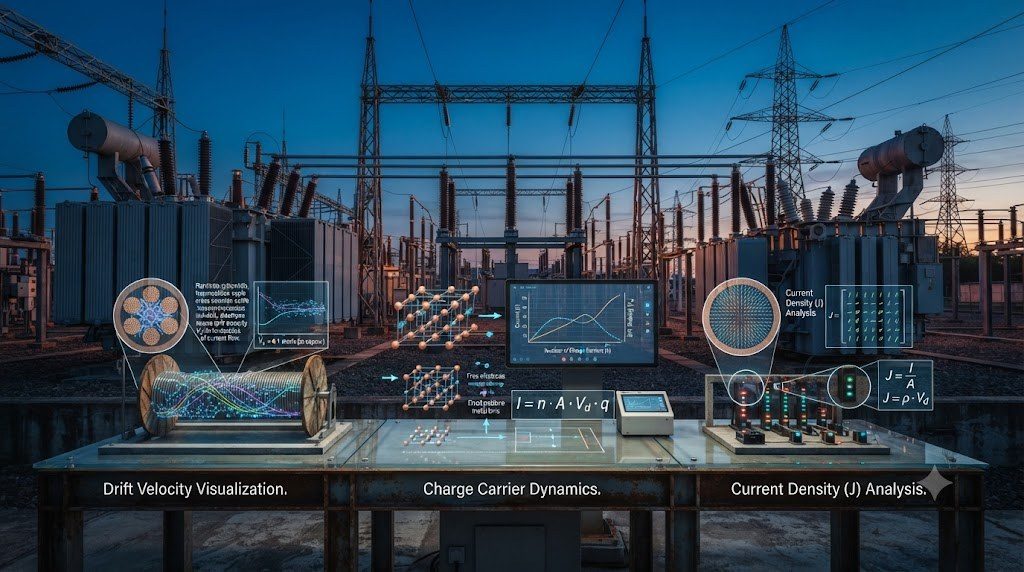
Electric Current Fundamentals: Drift Velocity, Charge Carriers, and Current Density

In physical chemistry and electromagnetic field theory, electric current is the macroscopic rate of transport of net electric charge across a defined cross-sectional boundary. Measured within the International System of Units (SI) in Amperes (A)—where one Ampere equals one Coulomb of charge traversing a surface per second (1 A = 1 C/s)—current represents the actual … Read more